
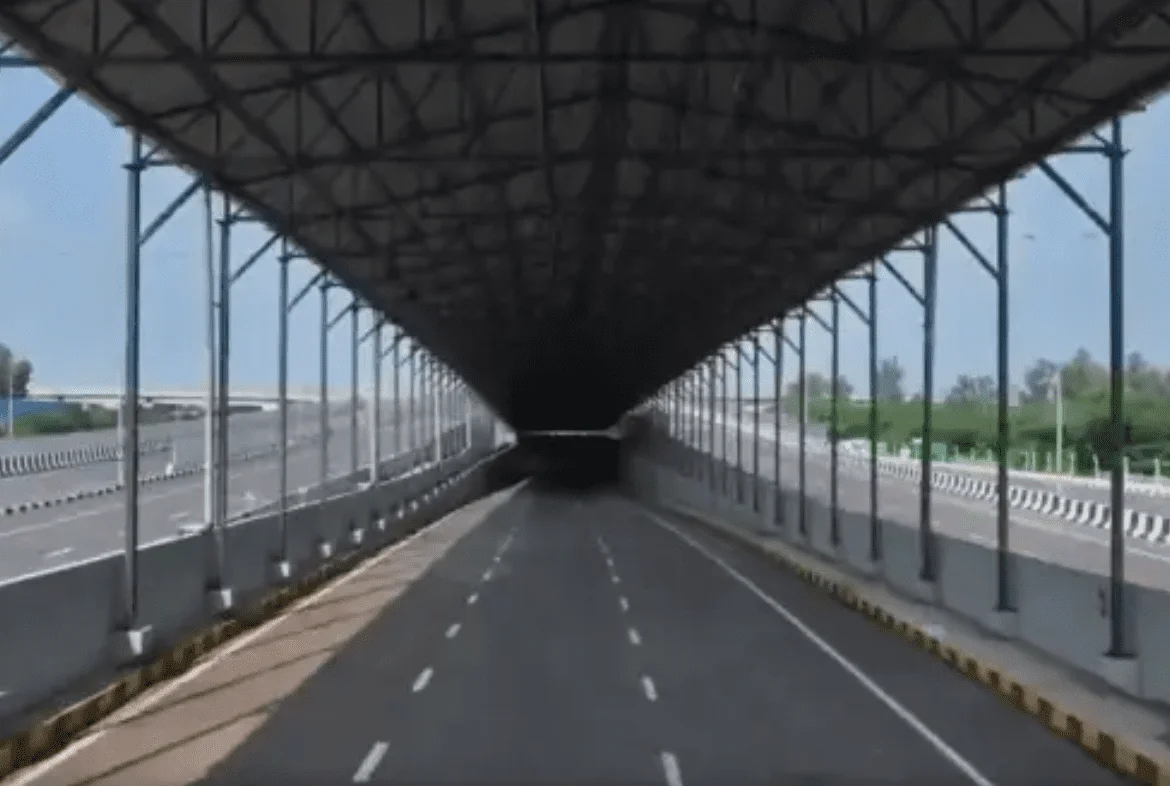
Cost Breakdown
- The Alipur–Dichaon Kalan stretch of UER-II was built at a cost of approximately ₹5,580 crore.
- Put together with the Delhi section of the Dwarka Expressway, the combined investment reached nearly ₹11,000 crore—₹5,360 crore for the Expressway and ₹5,580 crore for UER-II.
- Some sources estimate a higher overall project figure for UER-II, up to ₹7,716 crore, which includes multiple construction packages, land costs, and infrastructure enhancements.
⏳ Timeline & Construction Details
- Planning dates back to the early 2000s, but the project was delayed due to financial and land acquisition challenges.
- Construction was carried out in several phases or “packages.”
- Phase 1, from Alipur to IGI Airport (via Bahadurgarh and Najafgarh), was implemented by NHAI with DDA funding.
- Phase 1, from Alipur to IGI Airport (via Bahadurgarh and Najafgarh), was implemented by NHAI with DDA funding.
- By August 17, 2025, the 75.7 km corridor (spanning Delhi and Haryana) was officially inaugurated and became operational.
- Earlier projections in late 2024 indicated that UER-II would be fully functional by December 2024.
What UER-II Delivers for Locals
- Overall Connectivity
UER-II links NH-44 in Alipur to NH-48 near Mahipalpur, effectively forming Delhi’s “third ring road.” It passes through key zones like Rohini, Mundka, Najafgarh, and connects to Dwarka via spurs to Bahadurgarh and Sonipat. - Drastically Reduced Travel Time
Travel time from the Singhu border (North Delhi) to IGI Airport has dropped from around two hours to just 20–40 minutes in some projections. - Reduced Inner-City Congestion
UER-II relieves major bottlenecks across the city—Inner & Outer Ring Roads, and choke points like Mukarba Chowk, Dhaula Kuan, Madhuban Chowk, and NH-9. - Boosts Multimodal Connectivity
The corridor integrates with key transport hubs—Delhi Metro lines, Yashobhoomi Convention Centre, upcoming Bijwasan railway station, and regional bus depots—streamlining movement for both commuters and goods. - Economic & Realty Upsides
Better access and reduced travel time are already increasing demand in real estate markets—Rohini, Dwarka, Sonipat, Kundli, and adjacent suburbs are seeing rising interest from home buyers and developers. - Support for Safety & Local Access
Plans call for dedicated service roads, CCTV surveillance, ambulance services, and strict restrictions (e.g. banning two-wheelers) to ensure safe, efficient access for nearby residents.
| Aspect | Details |
|---|---|
| Cost | Approx. ₹5,580–₹7,716 crore for UER-II (₹11,000 crore combined with Dwarka Expressway) |
| Length | 75.7 km (spanning Delhi and Haryana) |
| Completion | Infrastructure completed; inaugurated August 17, 2025 |
| Key Benefits | Faster travel, reduced congestion, multimodal integration, real estate uplift, safer infrastructure |
Final Thoughts
UER-II isn’t just another road—it’s a transformative corridor reshaping how Delhi moves, connects, and grows. With massive savings in travel time, decongestion across the NCR, and tangible economic benefits, it’s a game-changing boost for residents, businesses, and property seekers.


